
Showing posts with label transition. Show all posts

25 Jan 2013

Trans Kids and Reproductive Choices

Trans kids today have new options for transition. Few people even know about these possibilities, although awareness is increasing. In my own pre-teen years, I noticed that my girlfriends were starting to change, and I felt different from them. In my private, inner thoughts, I believed I should be a gay boy, but that seemed so very far from what was possible in reality that I wondered from time to time if I was crazy. I didn't know about the existence of transgender people until I was an older teenager, and even then, I had no idea that trans kids could access any kind of specialized medical help.

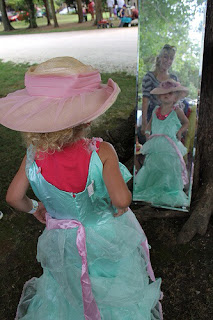
Photo: Visit Cape May (Creative Commons)
Hormone blockers have long been used to delay the development of secondary sex characteristics in children experiencing precocious puberty. More recently, paediatricians have started prescribing them for trans kids. This prevents a female-to-male (FtM) trans boy from growing unwanted breasts and experiencing other pubescent changes. In the case of a male-to-female (MtF) trans girl, the blockers halt all the powerful effects of testosterone, including deepening of the voice and changing of the face shape. At age 16 or 18, depending on who you're talking to, patients can begin taking synthetic hormones so that they will develop the secondary sex characteristics of their intended gender, or they can take nothing and develop according to their genetics.

The effects of the hormone blockers are completely reversible. Nevertheless, if an FtM teenager takes them and then takes testosterone as a young adult, his female sexual organs will not mature. I don't know if they would ever mature if he stopped taking the testosterone some years later. Testosterone use in FtM trans guys who transitioned after puberty can cause female sex organs to atrophy, and may also result in polycystic ovary syndrome (PCOS), which can lead to permanent infertility. I haven't been able to find good information concerning its effect on individuals who used hormone blockers and never produced natal hormones.

If I'd known about hormone blockers and the possibility of transitioning earlier in my life, would I have done so? I don't know. I didn't have the social supports necessary for transition at that time. It's hard to separate such a support system from an individual's emotional readiness. I wonder if I may have been much happier earlier in my life if I'd been able to transition as a teenager. I don't know if the choice would have been as clear for me at age 12 or 14 as it was at 23.

If you had asked me when I was ten years old if I thought I would ever want to birth a baby, or even adopt one, I would have for sure said no. At age twenty and even twenty-four, I would have still said no. Nobody asked me. When discussing transition, I don't remember being asked by my therapist, family doctor or endocrinologist if I thought I ever would want to have kids. My surgeon definitely didn't talk to me about future breastfeeding. I'm guessing that most trans people and their health care providers assume that infertility is the price we pay for transitioning. Recently, some people have accused me of wanting to "have it all" - meaning the correct gender identity and my child. Well, isn't that what most others can enjoy?

I didn't contemplate having a relationship and a family until after I'd taken testosterone and had top surgery. I wasn't content enough before that to have any inkling of what I really wanted in that regard. Now, my son and my husband are the most precious parts of my life.

Do I think that trans kids shouldn't take hormone blockers so that they can maintain their reproductive potential? Do I think they shouldn't transition at a young age? No and no. Each individual has to make his or her own decision. Others can guess at how badly someone needs to transition and when, but only the person contemplating transition can really know. Some trans kids suffer from such severe gender dysphoria that they are depressed and even suicidal. These children often feel that they need to transition as soon as possible. Others, like I was, can kind of manage by keeping very busy and not being terribly self-aware - they might not need to transition as urgently.

Sometimes I wish that I could wake up in the morning with a physiologically male body, but I would never trade my baby for anything. Most of the time, I enjoy traveling my unique path. I am comfortable enough with my male-sounding voice, my beard, and my flat chest. The parts of me that I don't love so much are what helped to make the family I love so deeply. This is my conundrum.



27 Sept 2012

Overcoming Difference Through Milksharing

I've been having tons of fun reading and posting everyone's pieces for World Milksharing Week's Blog Carnival. After musing on it forever, I finally wrote my own today, about finding my place in the milksharing community.

I am a transgender man. I am in a gay relationship. I breastfeed my kiddo.

And I can tell you right now that I feel a deeper connection to our Mormon and Mennonite milk donors than I do to many of my other friends and community.

My past experiences as an LGBT person encountering religious folk have generally not been pleasant. Among many other comments, a Muslim friend once told me that being gay is worse than committing murder (I hadn't yet transitioned at the time), and a Christian noted that queer people burn in hell forever. My partner and I posted on Human Milk 4 Human Babies that we were a gay couple looking for milk for our baby, and assumed that LGBT-friendly donors would self select. We hoped that others would remain silent.

When I first realized that one of our milk donors, we'll call her Sherry, was Mormon, I was totally shocked that she would want anything to do with us. We had received her milk through a friend, and I thought that perhaps the original donor just didn't know much about us. We met for the first time a few days later, and Sherry gushed over our ten day old boy. In fact, I believe she said to him something like, "You make my uterus ache! Holding you makes me want another baby."

At that moment, I realized that Sherry and I had much in common. We both love holding babies, we are both attachment-minded parents, and we both really care about the health of babies - all babies. Sherry's milk maintained my son's normal gut flora on his fifth day of life, while a feeding of formula would have altered it, for the worse, for weeks to come.

Some Christian donors have told us that they don't understand everything about who we are, but they are open to learning, and they have a whole lot of respect for our commitment to breastfeeding and human milk. I am learning that there is great variety amongst individuals' religious paths. Not every Christian I meet is like the woman who once hurled the phrase "Jesus loves you" at me as if it was some kind of insult.

Outside the milksharing community, I often get comments like, "You're sure letting the baby run the show, aren't you? You know he would be fine. Formula isn't evil. It's ok to cry." I am simply responding to my son's needs - to be picked up, to nurse, to have human milk. I feel misunderstood, defensive and embarrassed when someone criticizes my parenting in this way. I know that I have done my own reading about everything from the risks of formula feeding to the effect of excessive cortisol in the brain of a baby who is left to cry. It's not that I lose confidence in what I'm doing when I listen to such remarks, but I very quickly feel that I am an unwelcome, "other" kind of person ("other" being a word I had previously associated only with being transgender in a cisgender world.)

A few years ago, I would never have guessed that my family's strongest, most supportive parenting community would include people who are aligned with religions that have deeply conservative threads. The milksharing community is incredibly diverse in terms of ethnicity, family structure, sexual orientation, financial status, religion, and language - it is expanding rapidly all over the world.

When one parent goes to the trouble to express and store her milk, and she posts on a social network to find someone to give it to so it won't go to waste, we know that she values human milk. When another parent responds to her post and drives across the city to pick up that milk rather than buying a can of formula from the corner store, we know that he or she prioritizes normal infant nutrition. Donors and recipients meet on the common ground of good health. It is that simple.

22 May 2012

My Queer Conversation With a Ninety-Year-Old

A conversation I had today reminded me yet again that age is not necessarily a good predictor of open-mindedness and compassion.

First, a bit of background. I met Luanne, a ninety-year-old woman, through a friend. This summer I am planting and maintaining Luanne's large vegetable garden and flower beds along with another friend of mine, Ana.

Today it was just me and my little boy, Jacob, weeding at the garden. Luanne opened her back door to say hello. I chatted with her for a few minutes and we both enjoyed watching Jacob crawling on the lawn. And then came the question: "Who is the baby's mother? Is it Ana?"

purple flowers
"No, he's my baby. Ana is my friend."

'"But who is his mother?"

"Ummm, well, my partner... well, we're a gay couple." I blurted it out and then looked at her, waiting.

"Gaaaaaaay...?"

"Yes."

"You mean, your wife is a man?"

"Yessss..." Close enough.

"So where did you get the baby from?"

I'd really been hoping she'd stop at gay. I couldn't bring myself to lie to her either though. "That's a bit complicated." I hesitated.

"Oh, I hope you don't mind my asking. It's not too personal, is it?"

"I hope you don't mind hearing the answer." I paused and looked at her. She looked back inquisitively. Ok, fine. "I'm transgender. I was born female but I transitioned to male. Have you heard of that before Luanne?"

"Well, on TV, yes, I suppose so."

"Ok, so, I took testosterone to transition, and had a chest surgery. But when my partner and I got together we decided we'd really like to have a family. We thought about adopting, but realized it might take a very long time. So, I talked to my doctors about it and asked if it would be safe for me to carry a child [I always emphasize the doctor/safety part of the story, especially around potential skeptics], and they said to stop taking the testosterone and it should be fine. I got pregnant, and had the baby. He's our biological child."

"Oh, wow, I've never heard of such a thing."

"It's a bit unusual, isn't it?"

"Well, as long as you have a baby, that's what's important."

I left the breastfeeding and milk sharing discussion for another time... And then we went back to talking about the geraniums. She didn't want white ones after all because they apparently turn brown when they get rained on. Too bad Ana probably already bought them this morning, following yesterday's instructions.

If Luanne, at ninety, born in 1922, can get all this, and simply be happy that we have a baby (and that we've pulled out an awful lot of grass and dandelions the last few days), what is anybody else's excuse?


20 Apr 2012

One Step Forward For Human Rights

A momentous decision for transgender people has come out of Ontario today: the Ontario Human Rights Tribunal has ordered the provincial government to amend its legal requirement for sex designation change within 180 days. Currently, Ontario's Vital Statistics Act stipulates that a trans person must undergo sex reassignment surgery before his/her gender marker can be changed. The human rights tribunal declared this to be discriminatory.

Male symbol
Today's decision is huge for transgender people across the country, including myself. I transitioned from female to male by taking testosterone and having a chest surgery. I have a beard and my voice is deep - no stranger on the street would ever think that I am anything other than a regular guy. But since I have not had a complete ovariohysterectomy (or in veterinary language, a spaying), I am legally female. My driver's license has an F on it, and my passport blares FEMALE in giant print. When we applied for Jacob's birth certificate, we had to check off the "mother" box for me, and then we attached an essay in explanation.

Your birth certificate is the go-to document that must be used to apply for passports or to make changes to any other document. I am required to out myself as transgender every time I present my ID or other legal documents.

So why didn't I just get bottom surgery? Well, it is hugely expensive, rather risky, and involves a long recovery. And... I would not have the family I do now if I had removed my female organs. I live happily and comfortably as male, and what is between my legs is nobody's business besides my partner and my doctor.

Sometimes the discrepancy between my appearance and my documents is just an annoyance and a hassle, but in other situations it is a matter of personal safety. Two years ago Ian and I traveled to India and Nepal - every time I showed my passport to board a plane or even apply for a park pass, I worried that someone would notice the word FEMALE. In those countries, could I be harassed by police or customs officials? Could I be detained? Before we left for our trip, my doctor wrote me a note of explanation, and that's all we had to depend upon. Luckily, my fears were never realized and I am grateful.

It is my hope that the tribunal's decision will quickly help to change regulations in other provinces as well as at the federal level. I know I will breathe a great sigh of relief on the day when my legal documents finally match my gender identity. I look forward to being recognized by my government as my son's Dad.


4 Apr 2012

Responsive Parenting

The first word that comes to mind when I think of attachment parenting is "responsive". I want to respond quickly and compassionately to my child. Since I'm just at the beginning of my adventures in parenting, this has mostly meant breastfeeding so far. What do you do when an infant wakes up crying? Breastfeed! What do you do when your baby is hurt? Breastfeed! Scared? Breastfeed! Tired? Breastfeed! But for me, responding to my baby appropriately also means ignoring everyone else - the glares, the stares, and the giggles. I'm transgender and I breastfeed because it is what my baby expects and deserves.

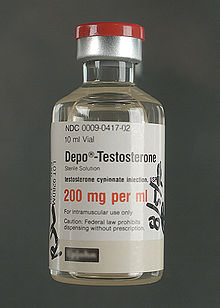
Bottle of injectible testosterone
My infant doesn't know I'm transgender.

At this point in his short life, my child has no idea that I'm any different from any other breastfeeding parent. He doesn't know that I was born female but took testosterone to transition. He doesn't know that I had chest surgery and that's why we have to nurse using a supplemental nursing system. He doesn't know that while he has two dads, most other kids have a mom and a dad.

What does my baby know? He feels that he wants to be held a lot, although this is beginning to change as he explores the world more and more. He knows that when he nurses, much of his body touches a warm, caring adult body and he is safe. He feels that he wants to suck, A LOT.

So I have to respond selectively to the people around me, which is not always easy. I'm ultra-sensitive to my boy. I try to breastfeed him when he gives early signs that he may want to nurse. I am insensitive to the man in the restaurant who is staring as I latch on my little guy. If I'm feeling brave, I look up and smile at him, but mostly I pay attention to positioning my baby and the SNS. I don't respond to the woman who stares at me or the teenagers who point and giggle. I'm busy. If these other folks are hungry, I'm pretty sure they can go off and find their own food without my help, but my baby is depending on me. He trusts me.

I will always remember the funny looks I've received, while my baby may or may not remember breastfeeding depending on his age when we stop. But he will get through his toddlerhood and early childhood with a strong sense of attachment. He knows that I will always respond.

This post is part of the Attachment Parenting is for Everyone blog carnival, hosted by Attachment Parenting International. Learn more by visiting API Speaks, the blog of Attachment Parenting International.