
Showing posts with label lactation consultant. Show all posts

21 Sept 2012

Supporting Families in Milksharing as an International Board Certified Lactation Consultant

This year's World Milksharing Week Blog Carnival includes posts by a wide variety of individuals, including donors, recipients, activists, academics, authors, and health professionals. I am thrilled to present this piece by Amber McCann, blogger and International Board Certified Lactation Consultant, about why she, as a health care provider, supports milksharing. She explains what people like her can do to help their clients make informed choices in milksharing, an area that many shy away from.

As an International Board Certified Lactation Consultant, I have, first and foremost, an ethical obligation to provide evidence-based information to my clients to support their breastfeeding relationship. Every day, for a variety of reasons, I encounter and encourage families who need to supplement their baby’s nutrition with something other than milk directly from the mother’s breast. Today, they have many options: pump and feed their own milk, supplement with some sort of donor milk, milk-based formulas, soy-based formulas, pre-digested formulas . . . lots of options, lots of questions, lots of opportunities for parents to be confused.

I believe that parents are capable of making the choices that are best for themselves and their families.
It is my job to make sure they have all the information to do so.

The World Health Organization, in its Global Strategy for Infant and Young Child Feeding, says,


“for those few health situations where infants cannot, or should not, be breastfed, the choice of the best alternative - expressed breast milk from an infant’s own mother, breast milk from a healthy wet-nurse or a human-milk bank, or a breastmilk substitute…depends on individual circumstance.”

Since this is coming from a global authority on health, I feel pretty darn confident using this hierarchy while supporting my clients in their supplementation decisions.

Most Ideal Option - Expressed breastmilk from the infant’s own mother.
Next Most Ideal Option - Breast milk from a healthy wet-nurse…SCCRREEEEECH!!!!


(do you see the virtual brakes going on???)

Wet nurse? Really? In this day and age? With HIV, hepatitis, and any number of undesirable diseases that can be passed through bodily fluids? What would wet-nursing even look like in today’s society? The first reaction of many is to simply pass off the idea as old fashioned, ancient, and outdated, not to mention dangerous. And in the United States, where I live, it is generally understood that if a mother’s own milk isn’t an option, formula is the obvious default. Why even bother?

Because we, as humans, are designed to consume human milk.

In our current environment, actual wet-nursing (a woman feeding another’s baby directly at her breast) is deemed by many to be inconvenient, too intimate, and—if you will—too gross. But what about the sharing of breast milk from one mother to another? Since most mothers have access to a breast pump, it has become increasingly easy to package milk in a shareable form. And with the formation of groups such as Human Milk 4 Human Babies (HM4HB) that provide a space for families in need to connect with families who want to give, doesn’t it make sense that we would at least explore the option? Can feeding a child the milk from a mother not his own be a viable solution to our supplementation needs? Is it an option that I, as an IBCLC, am willing to share with the families in my care? I answer with a strong and firm YES.

When I first became aware of milk sharing, it was a “secretive” practice, one not discussed openly and one that many organizations (breastfeeding supportive and not) chose to distance themselves from. When an article appeared on TIME.com in November of 2010 about the rise of the use of social media to facilitate milk sharing, I was quick to say “What can I do to help?” because the goal seemed obvious to me: get human milk into human babies.

What I wasn’t prepared for was the strong backlash from my own professional community saying, “But what if a baby gets sick or even dies?” Quite a number of IBCLCs I know were involved in milk sharing arrangements in their own breastfeeding years and some continue to be “closeted” about their own experiences. I attended the FDA meeting in December of that year discussing the regulations in regards to donor milk and while informal sharing wasn’t formally on the agenda, it certainly was on everyone’s lips in the room. There was palpable fear that one bad outcome from milk sharing would halt all the positive momentum that breastfeeding was gaining in our culture. One expert even spat out, “These women…these women who are doing this are going to hurt or even kill their babies.” I maintain that they are simply trying to feed them the food they were designed to eat.

But, what about the RISKS, with a capital R? Wouldn’t I be putting the health and lives of the babies I serve at risk if I offer milk sharing as an option? There is nothing in life that is without risk. Is milk sharing risk-free? Absolutely not. There are also risks to breastfeeding and formula feeding. Dr. Karleen Gribble and Dr. Bernice Hausman discuss these concerns in their paper Milk Sharing and Formula Feeding: Infant Feeding Risks in Comparative Perspective. In it, they discuss the issues of contamination of milk with pathogens, chemicals, concerns with milk collection and storage hygiene. The also discuss the risks to formula use that are not present when feeding human milk. In addition, there is a section devoted to the risk of HIV from the use of shared milk. I strongly advise every breastfeeding professional as well as any mother I am working with to read this paper and discuss their concerns. Drs. Gribble and Hausman conclude that “instead of proscribing peer-to-peer milk sharing, health authorities should provide parents with guidance on how to manage and minimize the risks of sharing human milk.”

How do IBCLCs instruct and inform clients about the risks and benefits of consuming or donating shared milk?

How do we advise our clients to mitigate those risks?
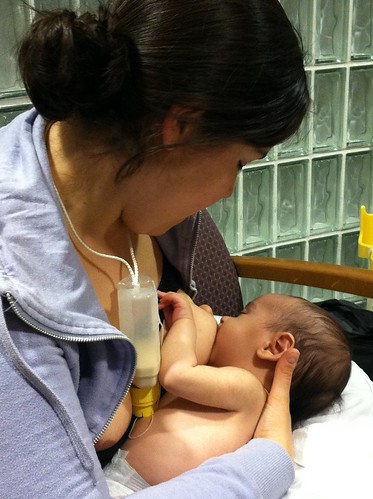
Mom nursing with a supplementer
Photo via World Milksharing Week on Flickr


For recipients: When one of my clients is in need of milk and is considering milk sharing, I strongly encourage them to think about whether people they already know might be willing to donate. They also might explore location-based online milk sharing groups (like HM4HB), and then groups that facilitate broader-range sharing and the shipping of donor breast milk (like MilkShare). I do not condone the sale and purchase of breastmilk and I strongly encourage my clients to not consider it as an option.

No matter where the milk is coming from, I encourage my clients to thoroughly research what sorts of screening they consider essential (such as blood work from pregnancy and questionnaires about lifestyle choices such as alcohol and medication use). It is important that both parties have clear expectations about what their milk sharing arrangement looks like. At no point do I, as an IBCLC, engage with the recipient family as a “milk broker.” The family is fully responsible for finding, contacting and making arrangements with their milk donors. As an IBCLC, my role with milk recipients is only to provide information and resources.

Of note, it is always my hope that supplementation of any type can be eliminated or minimized because of an increase in a mother’s own ability to make milk. The milk sharing community is often particularly in tune with the need and desire of mothers to work hard to rebuild their milk supply. Some families get a donor and a cheerleader-in-one! Many mothers feed donor milk through the use of a supplemental feeder, which can help mothers to produce increasing amounts of their own milk by stimulating the breast while delivering the supplement. There are many stories of those who were in need of donor milk, were able to rebuild their supply and then donate milk back into the community.
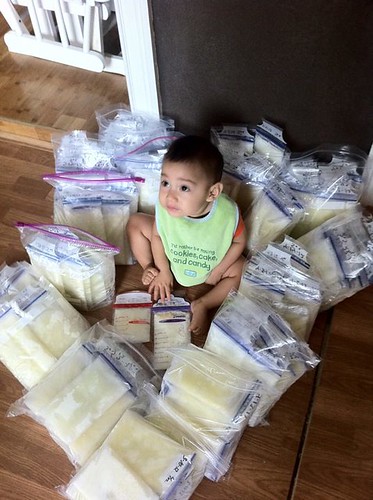
Baby sitting on the floor surrounded by bags of donor milk
Photo via World Milksharing Week on Flickr
For donors: I often have mothers, in their glee at how much milk their body is providing, send me an email saying they “had so much we had to dump it down the sink.” Nothing strikes panic into the heart of an IBCLC faster! If a mother tells me, as her lactation consultant, that she has more milk than she knows what to do with, I offer her information about donation. I share with her the options of contributing to a HMBANA milk bank, donating directly to another family or sharing her milk with a for-profit milk bank. (Though I have significant ethical concerns about these banks, I do share the information with my clients so that they can make the best decision for their family.)

I stress to the family that the milk they have is first and foremost for their own baby. I know that many families feel incredibly proud and thankful to be able to share of their excess. I encourage families to participate openly and honestly in all screening with their recipient family and to make sure that both parties have clear expectations about what their milk sharing arrangement looks like. At no point do I, as an IBCLC, engage with the donor family as a “milk broker.” They are fully responsible for finding, contacting and making arrangements with their milk recipients. As an IBCLC, my role with milk donors is only to provide information and resources.

An obvious question in all of this is why wouldn’t a mother in need of additional milk for her child simply obtain it from a milk bank? Then we wouldn’t be talking about risks of disease and contamination. In an ideal world, families would be able to receive ALL the milk they need from milk banks. Milk banks would be located in every community and have an unending supply of milk. I believe this can be a reality. I believe that there can be plenty of milk available to every baby that needs it. As a passionate advocate for getting human milk to human babies, Emma Kwasnica says, “milk is a free flowing resource.”

Unfortunately, in the United States, this isn’t yet the reality. As a nation, we need to drastically increase the number of milk banks and the amount of human donor milk available. The Human Milk Banking Association of North America (HMBANA) currently has 12 active banks. These banks do incredible work and, rightly so, their priority is on making sure that the MOST CRITICAL babies receive the milk that they process. For these little ones, having access to human milk can be, quite literally, a matter of life and death. Even this week, several milk banks, including those in Indiana and Utah, have issued pleas in the media for increased donations because their supplies are low. It is absolutely essential that these babies be the first to have access to processed donor milk.

Does every baby need its milk processed by a milk bank focused on the needs of vulnerable infants? For the most fragile babies, the complex processes of a milk bank (milk pooling, pasteurizing, and testing) are critical. The needs of a healthy term newborn are different. I liken it to this: If you had a dear friend who had recently received an organ transplant, you would do everything within your power to visit with them in a healthy manner by scrubbing arms and hands and wearing a mask. But, if that same friend has just gone through a “healthy” event, like birth, you would simply wash your hands. Different circumstances require different levels of caution.

Where does that leave healthy babies? In my practice, I see many mothers who, for of a variety of physical, emotional or circumstantial reasons don’t make the milk that their baby needs. At some milk banks, families of healthy babies can sometimes purchase donor milk but it is typically in limited quantities, and only available when supplies exist to meet the need of critical infants first. While the cost associated is reasonable, considering the cost of processing by the milk bank, it is often prohibitive to the families in need.

Is the only option for these families infant formula? I have every confidence that the human milk banking advocates all over the globe would affirm the belief that all babies have the right to human milk. I think that milk banking and milk sharing CURRENTLY serve very different populations of babies. Above all, my loyalties are not to milk banks or the milk sharing movement, but rather to babies and their families. There is room in the community for both methods of getting human milk to human babies.
Breastfeeding support that believes in you! Supporting families in milk sharing as an IBCLC. Nourishbreastfeeding.com 
I have been privileged to work with a number of families who were involved in milk sharing, both on the donor side and on the recipient side. I have seen milk donations have a significant impact on the health of a child. I have seen milk donations foster community that might not have happened otherwise. I have seen milk donations turn grief into hope. I have seen milk donations empower families and save babies’ lives.*

Milk sharing is not the right choice for every mother in need. Milk sharing is not the right choice for every mother who desires to donate her milk. But for many families, milk sharing facilitates health, community building, and an opportunity to reclaim the breastfeeding experience for those whose journey didn’t go as they planned.

Again, I affirm that parents are capable of making the choice that is best for their families.

It is my job to make sure they have all of the information to do so.

*A nod to Ursuline Singleton for her statement at the 2012 ILCA Conference that “IBCLCs empower mothers and save babies’ lives.” Thank you, Ms. Singleton, for so clearly helping to define what is essential to my profession.

5 Mar 2012

Tips for Transgender Breastfeeders and Their Lactation Educators

 This information is free for personal use. Any trans folk are welcome to print it out and give a copy to their health care provider! However, if you wish to publish any part of it or quote this material in a presentation you must obtain formal permission. Thanks!

I'm not a health care professional and this blog entry does not constitute or replace medical advice. Please consult your doctor if you need medical advice. 

**** This blog post has been updated and now comes in three parts: 1) general information 2) assisting trans men 3) assisting trans women

Transgender/transsexual/genderfluid Tip Sheet - General Information
Prepared by Trevor MacDonald

This tip sheet provides some key details you should be aware of when offering reproductive/lactation support to transgender, transsexual, or genderfluid individuals. Keep in mind that in most ways, medically and otherwise, trans people are just like everyone else. There is a list of key terms and their definitions at the end of this sheet. 

Gender vs. Sex

Our reproductive organs and sexual anatomy define our physical sex - male, female, or intersex. Gender, however, is a person's inner awareness of their femininity/masculinity. Gender expression has to do with how an individual presents their gender to others within a given cultural context. For example, within western culture the colour pink has gone from being a traditional boys' colour to one for girls in only a few generations.

In most cases, a persons biological sex conforms to their gender and gender expression. The term for such people is cisgender. Transgender, transsexual, and genderfluid people have a gender identity or gender expression that does not match what their particular society expects of them according to their anatomy. Some trans people choose to use medical therapies such as hormone treatments and/or surgeries to alter their bodies. Others do not want or are unable to obtain such interventions, but may express their gender in other ways such as choices of clothing or makeup.

Gender Identity vs Sexual Orientation

A person's gender identity has to do with how they self-identify. Their sexual orientation refers to what kind of person they are sexually attracted to. A person can be trans and gay, or trans and straight, or trans and bisexual, etc.

Asking Questions

It may be essential to ask questions regarding an individual's gender identity or history of medical transition in order to provide adequate care. However, only ask those questions that are relevant. Do not ask questions solely out of curiosity.

Language

Always use the pronouns that refer to an individual's expressed gender, not their assigned birth sex. For example, a male-to-female transsexual woman is 'she'. If you are unsure of which pronouns a particular individual may prefer, simply ask in a respectful manner. If you make a mistake, apologize promptly and move on. Some people prefer gender-neutral pronouns, such as 'them' and 'they' or 'ze' and 'zir'.

The following terms are derogatory. Do not use: tranny, he-she, she-male, gender-bender, or transvestite.

Do not refer to someone 'masquerading', 'pretending', 'disguising', etc. in their gender.

Use transgender as an adjective, not a noun or verb.
            He is a transgender person, not "He is a transgender." (similar to how it is best           to say             "He is a black person", rather than "He is a black")
            A person is transgender, not transgendered. It is never necessary to add the suffix 'ed' to transgender.

Common terms

*Note that these definitions explain how the following terms are generally understood. However, individuals within the trans community may define them differently or may self-identify outside of these labels.

cisgender: someone whose gender identity matches their assigned birth sex (they are not transgender)

FtM: female-to-male trans person

MtF: male-to-female trans person

gender binary: The notion that there are two genders, male and female. Many trans people understand gender as a spectrum. 

gender expression: a person's outward presentation of their gender through physical traits, clothing, makeup, etc.

genderfluid/genderqueer: someone who identifies between or beyond the extremes of female and male on the gender spectrum, or who identifies as both female and male at once or as some combination of genders.

gender identity: a person's inner sense of their gender.

intersex: a condition in which an individual is born with reproductive and/or sexual anatomy that does not fit the usual male or female definition.

trans: an umbrella term meant to include transgender, transsexual and genderfluid people

transgender: a person whose gender identity or expression does not match the typical societal expectations of their birth-assigned gender. Transgender people may or may not wish to modify their bodies to varying degrees by taking hormones or having surgery.

transition: a change in one's public gender identity (one's inner gender identity may have been the same since birth).

transsexual: a person whose gender identity does not match their sex as it was assigned at birth. Transsexual people usually wish to modify their bodies in order to alleviate this incongruence.


Tip sheet for assisting trans men

Trans men are individuals who were born with anatomy typical of females but identify on the masculine side of the gender spectrum. Some choose to give birth and/or nurse their babies, and may require lactation support.

Language

Although both men and women have breast tissue, the word 'breast' is most often associated with women. Trans men may be more comfortable referring to their 'chest' and 'chestfeeding' or 'nursing' their infants, rather than 'breastfeeding'. Trans men may refer to themselves as 'dad', 'papa', or another term, rather than 'mom'. Don't make assumptions. Remember that if you are unsure, it is best to ask about which names and pronouns an individual prefers to be used. If you make a mistake, apologize promptly and move on.

Testosterone Use

Many, but not all, trans men choose to take testosterone. Testosterone normally causes the cessation of menstruation and ovulation, and brings about male secondary sex characteristics such as deepening of the voice, growth of facial hair, and male pattern baldness.

When a trans man stops taking testosterone, his cycles are likely to return after several weeks or months, depending on how long he took the medication and his own physical particularities. However, most of his male secondary sex characteristics will remain. For example, once testosterone has stimulated the growth of hair follicles in a person's face, those follicles will stay there and hair will keep growing unless extensive electrolysis treatments are undertaken (a common element of male-to-female individuals' transitions).

Although very rare, some trans men have been known to become pregnant accidentally while taking testosterone. Testosterone is highly toxic to the fetus and should never be used during pregnancy. However, because the body metabolizes and clears testosterone rapidly, it is considered safe to conceive within a few months of discontinuing most forms of testosterone therapy.

Testosterone use during the period of lactation would likely interfere with the hormones required to produce milk and achieve let-down.

Top Surgery

Some trans men choose to have male chest-contouring surgery, also known as 'top surgery'. This is different from a mastectomy (a cancer treatment), or a breast reduction, which is performed to make a smaller but still female chest. The goal of top surgery is to create a male-appearing chest. In order to do this some, but not all, of the client's mammary tissue is removed. Complete removal of the mammary tissue would result in a sunken chest shape.

The preferred surgical technique for top surgery is variable, depending on factors such as volume of tissue and skin elasticity of the client. The 'double incision' technique usually involves nipple grafts, and is not ideal for maintaining nipple sensation nor preserving milk ducts. The 'peri-areolar' approach, with incisions that go around the outer borders of the areolae, leaves the nipple stalks intact and likely has better results in terms of future breastfeeding and milk production.

Binding

A trans man who has not had top surgery may choose to bind his chest in order to flatten it, thereby managing his gender dysphoria. Many years of binding may adversely affect the glandular tissue. Binding during the immediate postpartum period will increase the risk of blocked ducts and mastitis and may damage the milk supply. However, some individuals have had success with occasional, careful binding once the milk supply is well established and regulated. Anyone who practices binding during the lactation period should be advised of the risks of doing so, and should monitor the health of their chest closely.

Chestfeeding Goals

Some trans men who give birth do not want to chestfeed at all, in some cases for reasons to do with mental health. Others do, and opt to postpone desired top surgery so that they will be able to produce a full milk supply. Others who have had top surgery may still wish to develop a nursing relationship and may do so using an at-chest (at-breast) supplementer.

Gender Dysphoria and Chestfeeding

Gender dysphoria occurs when an individual feels discomfort due to parts of their body that do not match their gender identity. Growth (or re-growth after top surgery) of chest tissue during pregnancy may bring up extreme feelings of gender dysphoria in some individuals, possibly causing anxiety or even depression. Chestfeeding can do the same. For this reason, deciding to chestfeed is a very personal choice.

Supporting the Decision NOT to Nurse

Support an individual who has chosen not to chestfeed by sharing how he can quickly reduce his milk supply after the birth. Explain the supply and demand system that governs lactation. Encourage the client to remove only as much milk as necessary to feel relatively comfortable, since removing more milk will cause the body to increase production. Cold compresses and cold cabbage leaves may help reduce pain and swelling. The parent should NOT bind at this time due to the increased risk of pain, blocked ducts, and mastitis. Several herbs such as sage, peppermint, and parsley are said to decrease milk supply.

Discuss the many other ways of bonding with baby, such as bed-sharing, babywearing, and loving, attentive feeding. You may wish to let the client know about the possibility of obtaining human milk through milk sharing sites such as Human Milk 4 Human Babies or Eats on Feets.

Supporting the Decision TO Nurse

Be respectful when providing hand-on care. As in most health care situations, ask permission before touching an individual's body, explaining what you are planning to do and why. If an individual is not comfortable being touched, find other ways to help, such as demonstrating on yourself.

Watch for signs of postpartum depression. Trans individuals may be particularly at risk due to struggling with gender dysphoria in addition to the usual challenges of giving birth and caring for a newborn.

When assisting those who wish to chestfeed after a previous top surgery, it is essential to remember that nursing a baby is not only about the milk. An individual who has had surgery may produce a surprising amount of milk, or only drops, or nothing at all. Any amount of milk is valuable. By using a supplementer, the parent and baby can gain the benefit of bonding through a nursing relationship even in the absence of milk production. In addition, the action of nursing helps promote the normal development of the jaws and teeth in the infant.

Latching may be challenging for the parent who has had previous top surgery due to a relative lack of pliable tissue and skin. The parent may need to learn how to vigorously mould the chest tissue (make a 'sandwich'). When providing assistance, be creative and expect to try many different grasps from varying angles in order to find what works.

A reclining position may unfortunately cause the chest tissue to become even more taut and difficult to latch to. In this case, football hold or cross cradle may be easier.

Support Meetings

Encourage the trans breastfeeding parent to attend group meetings and ensure that a safe and positive environment is provided. We know that peer support is an important predictor of a parent's success achieving their personal breastfeeding goals. Trans parents may already feel isolated, especially if they do not know other LGBT families. Group meetings can be tremendously beneficial.

Those facilitating the meeting should know the location of a men's washroom or gender neutral washroom near the meeting room. They should use gender-neutral language such as "breastfeeding parent" instead of "mother" when addressing the group.

Other Support and Resources

The community of trans individuals interested in birth and various infant feeding methods is growing fast. At this time, the only online support group is the Facebook-based Birthing and Breastfeeding Transmen and Allies, with over 500members worldwide. The group includes many interested and supportive lactation consultants and LLL Leaders.

Toronto's LGBT Parenting Network runs a weekend course once every few years for transmasculine individuals considering pregnancy.

Diana West's book, Defining Your Own Success: Breastfeeding After Reduction Surgery, contains information relevant to trans men who have had top surgery. Also see her web site, bfar.org.


Tip sheet for assisting trans women

Trans women are individuals who were born with anatomy typical of males but identify on the feminine side of the gender spectrum. Some trans women may wish to breastfeed their children via induced lactation and/or using a supplementer.

Inducing Lactation

Trans women may induce lactation by following the Newman-Goldfarb protocol. A physician would need to prescribe the appropriate medications. Birth control pills should be started about six months before the baby is expected or as soon as possible. Domperidone is also suggested in the protocol. 6-8 weeks before the birth, the birth control pills should be stopped, and the woman should begin pumping frequently to stimulate glandular tissue and to remove milk. The domperidone is normally continued for the duration of the lactation period.

A trans woman should discuss with a physician, such as a reproductive endocrinologist, what kind of hormone treatment is best to take during lactation. Unfortunately, there has been little to no research done in this area. Some trans women have successfully taken a decreased dose of their usual estrogen while lactating. Any medications, such as anti-androgens or estrogens, should be carefully considered for safety during lactation on an individual basis.

Expectations

Some trans women have induced lactation with impressive results, providing nearly a full supply to their babies. The amount of milk that is produced will depend somewhat on how many years the women used hormones prior to inducing lactation, and how fully her glandular tissue developed during that time. If the woman had implant surgery, she may encounter some difficulty with severed ducts, damaged nerves, compressed glandular tissue, and/or scarring.

As is the case with chestfeeding trans men, the amount of milk that is produced is not as important as the nursing relationship itself. An at-breast supplementer may be used to support a nursing relationship.

Support Meetings

Encourage the trans breastfeeding parent to attend group meetings and ensure a safe and positive environment is provided. We know that peer support is an important predictor of a parent's success achieving their personal breastfeeding goals. Trans parents may already feel isolated, especially if they do not know other LGBT families. Group meetings can be tremendously beneficial.

Resources and Further Information

"Trans Women and Breastfeeding: A Personal Interview" by Trevor MacDonald, available at http://www.milkjunkies.net/2013/05/trans-women-and-breastfeeding-personal.html.

"Trans Women and Breastfeeding: The Health Care Provider" by Trevor MacDonald, available at http://www.milkjunkies.net/2013/07/trans-women-and-breastfeeding-health.html

Facebook-based Birthing and Breastfeeding Transmen and Allies group welcomes trans women interested in nursing their infants.

Diana West's book, Defining Your Own Success: Breastfeeding After Reduction Surgery, contains information relevant to trans women who have had breast surgery. Also see her web site, bfar.org.