Showing posts with label breastfeeding. Show all posts

26 Jun 2018

Breastfeeding/Chestfeeding and Gradual Weaning: A Snapshot in Time


Three-year-old: Waaaaaaa! I need uppy [being picked up] and nursing!
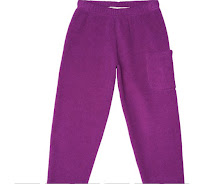
Purple fleece pants

Me: Ugh, I have to get the seven-year-old ready for school. I think you might be verrrrry hungry since you haven't eaten breakfast yet. Here, have a peach.

Her: Oh yeah! SO hungry. [Sigh. Eats peach.]

Ten minutes later.

Her: Waaaaaaaa! I need uppy and nursing!!

Me: Ugh. I was planning to try to do stuff, and things. So many things. Oh, I know what it is. You're super hot in those fleece-lined winter pants you picked out. How about we help you find something cooler to wear?

Her: Oh, yeah! I'm SO hot!!

After changing clothes.

Her: I need uppy and nursing!!!

Me: To deal with the aftermath of having felt so hot.

Her. Yeah.

Me: [Sigh] Ok.

14 May 2017

Jenna's Breastfeeding Journey: Trans Motherhood


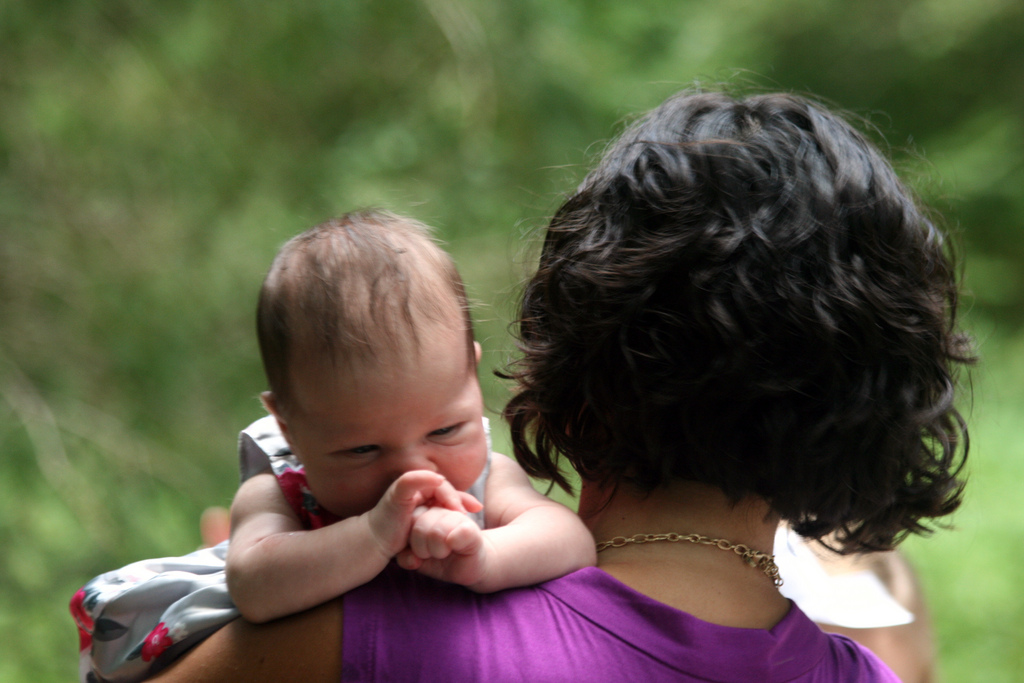
Image: Mother in a purple shirt holding a baby over her shoulder. Quinn Dombrowski, Flickr Creative Commons.
Yes, trans women can breastfeed! I wrote about this before, when I interviewed Sarah* about her personal experience. In another post, I talked to health care providers Dr. Jack Newman, Marylynne Biener, IBCLC, and Diana West, IBCLC, about what we know so far when it comes to trans women and breastfeeding .

Continuing on with this series of posts, I recently interviewed another trans woman, Jenna. She talked to me about her experiences with breastfeeding and raising her two children, whom we’ll call S and A, with her partner, E.

I’m so grateful to Jenna for sharing her story on this blog. I believe it is deeply important to tell these stories so that others in the trans community who might be dreaming of being parents one day can access this information and know that they are not alone. Thank you, Jenna!

Banking Gametes

Seven years ago, Jenna knew she might someday want to have kids that were genetically related to her. She chose to store her genetic material before she began taking estrogen as part of her transition. I asked her if she had any tips about banking gametes.

Jenna: Think about where you’re going to store your sperm in terms of where you might eventually want to use it for insemination. I didn’t do the research. It wouldn’t have been very hard for me to reach out and ask lesbian parents - which clinics are the good clinics, where did you conceive your child? Instead I went by location and I just went to the closest sperm bank to my apartment at the time. It turned out that we picked one of the worst sperm banks in our city in terms of being queer-friendly.

When we tried to use the sperm we thought, well, it’s already there, we might as well use this clinic, but we had some really bad experiences. In the end, we packed up our sperm in liquid nitrogen and moved it to another clinic. It was a big difference, and it all started with where I chose to store my sperm.

Jenna explained that the first clinic she and her partner used was very male-dominated. Doctors and staff seemed uncomfortable with transgender people in general, and they misgendered Jenna. A doctor doing an insemination procedure for Jenna’s partner, E, didn’t make eye contact beforehand, and left the patient with the light on and equipment still between her legs when he exited the room afterwards. At the new clinic, there was a greater diversity of clients, more female staff, and a more respectful attitude on the part of the doctors.

Why Breastfeed?

Jenna: I always thought breastfeeding was an important connection to have with a child. Because I couldn’t carry the child, I thought it was going to be the next best thing. I’d seen many people have that connection through nursing. That felt like something I needed to do. I knew it was possible for trans women to breastfeed, but I didn’t know much about how to do it.

Preparing for Breastfeeding

Midwife Alanna Kibbe referred Jenna and E to the Newman Breastfeeding Clinic in Toronto to learn about inducing lactation and breastfeeding. She had referred transmasculine clients there in the past and knew the clinic was welcoming of LGBT families.

Jenna: My timeline was that I’d been on estrogen therapy for 14 months before I had bottom surgery. I had my operation and stopped producing testosterone, and then our first baby was born three months later. It was a whirlwind. I received my papers for my legal change of sex only weeks after our baby was born. I’m technically her father, and there’s no way the government will change that. So I’m legally our first child’s father, and our second child’s mother. 

Anyway, when I induced lactation, I was not producing testosterone. They put me on a protocol similar to adoptive mothers, which seems so obvious, but it wasn’t obvious to most other providers I’d talked to. It’s really not that big of a deal. It’s the same thing that other non-gestational mothers - cisgender females - would do to induce lactation .

About two months before the birth, I was put on high doses of progesterone in the form of birth control pills. Then I stopped taking the progesterone three weeks before the birth, and I began pumping. I pumped about three times a day, although I was supposed to do more than that according to the protocol for inducing lactation.

Jenna explained that her endocrinologist had prescribed only estrogen for her at the time of her transition, not progesterone. Her progesterone was prescribed later by the lactation professionals. Similar to Sarah*, the other trans woman I interviewed with regard to breastfeeding, Jenna wonders if the common regime of estrogen-only for trans women is an over-simplification of the endocrine system. She suspects there may be health benefits to taking progesterone, outside of lactation.

Breastfeeding the New Baby - Sharing Breastfeeding and Managing the Milk Supply

Since Jenna’s partner was giving birth and planning to breastfeed, the couple needed to coordinate breastfeeding together. Milk production works on the principle of supply and demand, meaning that as milk is removed from the body, the body receives the signal to produce more milk. If less milk is removed than what the baby is consuming (for example, if the baby is being given supplemental bottles or if another parent is breastfeeding the baby), then milk production will likely decrease. I asked Jenna how she and her partner worked with this.

Jenna: I didn’t produce a lot of milk. I knew from the pumping. I’d get a few tablespoons, or maybe an ounce at a time. But I was able to nurse. I nursed my baby for about six weeks. Lactation consultants were worried about how my nursing might affect my partner’s supply, but it turned out that my partner had an oversupply of milk . So it didn’t play much of a role in her nursing experience. I was producing pretty small quantities so for a while it felt more like I was a human pacifier than actually giving many nutrients to this baby.

We joked that the baby would drink all four boobs - she’d go through all four of them and still be hungry, or still appear hungry. It was convenient for both of us to be able to nurse. In the birth centre, the day she was born, I nursed her in the rocking chair while E was getting stitched up from the birth, which was a pretty nice co-parenting experience. My partner was able to let go of the baby and know that she was getting the skin-to-skin time and the nursing and everything while she had to get stitched up, which is a relatively common occurrence after birth.

We were both working a lot that summer on our farming business. So I would nurse the baby but E would still nurse every two hours. On a half-day shift, I’d bring the baby to E so she could nurse her, but then I’d also nurse her in the off hours as well.

My nursing experience was really tainted by the fact that my partner produced so very much milk. I feel like it would have been a different experience if we’d had twins or if my partner had a low milk supply, and if there was more of a need for my milk. It was a lot of work to maintain my milk supply. I wasn’t getting up and pumping in the night. I was nursing sometimes in the night, but not as regularly as E was, and E had milk literally pouring out of her. And it was like, well, I’m enjoying the experience, and I feel like I had the experience for the first six weeks, but it didn’t seem like it was going to be a long-term viable situation.

Latching Challenges

Jenna: I found it difficult to latch her because I have quite small breasts, and quite small nipples. I was always doing the sandwich technique and I was restricted to quite precise nursing positions. Whereas, E could lie on her side and the baby would nurse from her, and E really didn’t have to hold on to one of her breasts and pinch it to get a good latch. The only position that worked for me was sitting in a chair with one arm grasping the back of the baby’s head and neck and my other hand pinching my boob.

I think it would have been different if I had more tissue there. My breasts have grown significantly in the last year. It took me four to five years of hormone therapy until I felt like I saw some significant breast growth, which isn’t too big of a surprise. But I think all trans women want it to happen in the first month, the first year.

For me (Trevor), as a transmasculine person who had chest surgery before my children were born, I can relate to Jenna’s challenges with latching. I’ve never been able to nurse comfortably while lying on my side, even after six years of nursing babies. As my babies grew bigger and stronger, I eventually no longer had to make a “sandwich”  for them to latch, but I continue to need to hunch over a bit so that my chest tissue isn’t too taut.

Baby Number Two

I asked Jenna if she nursed her second baby as well.

Jenna: Almost not at all. She latched on one night when I was alone with her during a crying fit, and it really hurt. Because of my partner’s milk supply and with A being born at the height of farming season, it didn’t make much sense to nurse. I didn’t want to do the work. Even though I loved the experience with my first and I’ll cherish that forever, it wasn’t totally the experience I was looking for. Again, I think it was because of my partner’s over-production, and her strong desire to nurse, as well. It didn’t make much sense for me to change my hormone therapy, to spend the time pumping.

In the end, E didn’t take much maternity leave at all, and I spent most of the winter with the baby after farming season was over. I was on parental leave for nine months. Even now that she’s a toddler, and I’m still the one that’s here for her every night and every morning. I’m developing a different connection.

It’s rare that I spend a night away from these kids, which is good and bad. I’m hoping as they get older, it’ll be easier to get away from them a bit more. It’s clear that S really doesn’t like it when I’m not here. When she comes home from daycare and I’m not here, she doesn’t like it. That’s the connection I’m enjoying with her, and that I have with our second child, A, too.

I’m an important person in A’s life even if I don’t nurse. We have our battles on the nights when E’s not here, but I put A to sleep every night. That was one of my biggest fears before I had children. I saw so many heterosexual couples where the male father couldn’t even get their kids to sleep at night. And I saw these mothers that were totally overwhelmed because they could never get a night away from their children because nobody else could put them to sleep.  In our family, it’s really me, I’m the one that puts my baby to sleep every night, even though I don’t nurse. That’s really important for me.

The birthing parent in our case is the one that works outside the home and is more career-driven. Clearly she still has this other bond with the toddler that I don’t have, in terms of the comfort that is sought out from nursing. I can see when she wants to nurse, and I can replace it pretty well with a bottle of breast milk. We’re trying to slowly wean our toddler, especially at night, so I try to use the milk from the freezer sparingly.

Learning from the Experience

I wondered if Jenna had any advice for other trans women who would like to breastfeed.

Jenna: You have to prepare. A trans woman has to prepare for breastfeeding when gestation starts, when the partner or surrogate becomes pregnant. You need to give yourself those nine months. Before pregnancy begins, you have to know about the hormonal protocol and know when you’re going to start it.

And it’s a lot of work. It’s not easy. I don’t want to take away from cisgender women’s experiences, but sometimes for cis women, breastfeeding seems easy. I know that’s not true for all cis women, but for many, milk production is this natural thing that happens without extra effort. For trans women, you have to put in some effort to make it happen.

Another tip would be to get a good electric breast pump! And to pay for the little attachment that holds the breast pump to your breasts so that you can have your hands free.

Confronting a Myth

Jenna: I came up against this idea from lactation consultants that the birthing parent’s milk is the best milk and that co-nursing might have negative impacts on the baby or on the birthing mother. This came out quite obviously in a prenatal course at the birth centre, when the lactation consultant there made a stern comment towards our situation. She presented this idea that the birthing parent’s milk is formulated specifically for the baby. That’s not untrue, but in contrast, the opinion we received at the Newman clinic was that a diversity of milk would actually be beneficial to the baby. Yes, the birthing parent’s milk is great for the baby, but that doesn’t mean other milk isn’t beneficial as well. Of course, I liked the latter opinion the best. I think the “mother’s milk is best” type attitude was more about discomfort with co-nursing and maybe discomfort with a trans woman nursing, but it was scapegoated onto the baby’s health.

Scientists do know that breast milk changes in terms of its fat, protein, carbohydrate, and antibody content as a baby matures, and even over the course of a feeding, or from one feeding to another. However, we don’t know for sure how all that happens. One theory is that the breastfeeding parent receives biofeedback from thebaby’s saliva through their nipples. If the baby is fighting off an infection, the parent’s body reacts by producing specific antibodies in the milk to help. If this theory is correct, then surely a trans woman who didn’t give birth to her baby would still receive this biofeedback through saliva while nursing. If two mothers co-nurse their baby, the baby would benefit from a greater diversity of antibodies.

The World HealthOrganization states that the best milk for a baby is its own mother’s milk, or if that is not available then milk from another mother, and if donor milk is also unavailable, then formula. 

Jenna is her baby’s own mother. A transgender mother is her baby’s mother and I believe she produces her baby’s best milk if she’s breastfeeding.

** If you’re a trans woman willing to share your own story about breastfeeding, please contact me at milkjunkies (at) ymail (dot) com. 

Did you find this post helpful? This blog is not supported by ads, so please consider making a donation using the button on the side.



1 May 2017

Successful Sleep Training: One Parent’s Guide


BedThe first night that my little one slept in his own room, he went down without any crying and he stayed on his own all night long! He did the same thing the next night. It was a miracle, the details of which I must share.

Sleep is really important to me, as a parent and as a human being. I’ve noticed that when I don’t get enough sleep, I have less patience for my kids (and others) and I feel generally irritable. I’m a better parent when I’ve had a decent amount of sleep.

So how did the magic happen? What did we do?

Sleep training for us happened in two parts.
  • Sleeping at night without nursing (night weaning). 
  •  Sleeping in his own room.
I’ve seen posts about infants crying so hard they vomited and parents who said it was “worth it” to “teach” the baby how to sleep. From what I can glean, the idea is to teach them that no one is going to pick them up so they might as well stop crying and get used to being on their own all night.

My experience was different.

Our kid slept in our bed with us from birth. When he cried, I nursed him. At times when that didn’t work, I’d pick him up and walk him up and down the stairs or even down the street until I got him back to sleep. Then we’d go back to bed together.

When our second baby was born, the first kiddo had to learn to wait to have his nighttime needs taken care of. That was the beginning of night weaning for him. If he cried, he often woke up the newborn, which meant I’d have to nurse her before I could help him get back to sleep. He started to understand, and got pretty good at waiting patiently. Soon enough, he started to fall back to sleep while I was still settling the newborn. Then he started sleeping through the night without waking up to nurse or cuddle at all. He was about four years old.

For the next few years, we all slept together on our king-sized bed.

Something big changed for our son when he turned six. He seemed to have an instant developmental leap and was suddenly much more mature. He went from fighting constantly with his sister as if he, too, were a toddler, to rolling his eyes and exchanging knowing glances with me if little sister was having a particularly toddleresque moment.

It also became apparent that child #1 needed a space to keep his own things. The toddler tried to scribble in his workbook and ripped apart his carefully-made projects. We began talking with our son about having his own room with some shelving and drawers for his favourite books and toys. He was thrilled!

Great, we thought. But would he want to sleep in it? I knew I was ready to no longer be kicked at night by a six-year-old, but how would he feel sleeping alone? 

He was excited!

My partner took the kids for an adventure to Ikea where they tried out all the kid mattresses by jumping on them. Our son chose the springiest one, with cheerful red sheets to go on it. We set it up at home with a nightlight. At bedtime, my partner read him a book and told him a story, as per usual, and the kid fell asleep.

It is truly brilliant to witness a child doing something for the first time exactly when they are ready for it. You get to see their interest and curiosity, as well as the joy and confidence that come from figuring it all out. My child felt proud.

When my son was an infant, friends told me that I had to "teach" him how to sleep or he’d “never learn”, that he’d be in our bed “forever.” Six years might seem like a long time, but a six-year-old child is still a little kid. And that’s okay by me.


I bet I can guess a question that might have popped into your head, though, if you read this far:

How do you have intimate time with your partner if you're co-sleeping with kids?

The kids go to sleep a while before we do, and our home has more than one room. So we hang out elsewhere, sometimes sitting on the downstairs couch, chatting (but more likely looking at our respective Facebook feeds, "liking" each other's posts). Or... you know. When we are ready to sleep, we join the kids in bed.

 Did you find this post helpful or entertaining? This blog is not ad-supported, so please consider making a donation using the button on the side.
5 Apr 2017

Parenting Survival: When My Toddler Can't Sleep

The Toddler was up at 2am so we went out to listen for frogs. Unfortunately, the frogs in the ditch seemed to be fast asleep. We settled for waking up all the animals in the barn. We got the rooster crowing nicely and the goats got up to pee and poop. Then we turned off the barn light and went out again, leaving them all wide awake. None of it woke the frogs.

Inside the house, we cooked plantain because the Toddler was famished. 
 
Toddler: Friends X and Y were here, but not right now.

Me: No, not right now. You know why?

Toddler: X and Y are sleeping!

Me: YES!!!

Smiles and cuddles. Yawn.
 
ALL this started because Toddler woke up wanting to nurse and in my groggy state I didn't notice that the damn supplementer tube was pulled out of the water and not working, which led to much screaming. Not your average breastfeeding problems, yet somehow I am certain every parent has been there done that in some similar fashion.

Now she has nursed back to sleep and is using my belly for her pillow.

Supplementer? Toddler? Yes. After relying on it heavily when she was an infant, we just have not been able to shed the tube. It is part of our nursing relationship, even though the "supplement" is water. She is about the best hydrated kid I know, and I suspect the water is alright for her teeth, too.

27 Sept 2016

La Leche League Celebrations!


2016 is La Leche League’s 60th anniversary, so this worldwide breastfeeding support organization is having some big celebrations. I’m honoured to be participating in two of these events, one online and the other in Chicago! 

Here’s the info:

We’re having an online global LLL meeting for 24 hours straight on October 1st.  Any person, regardless of gender, who is breast or chestfeeding or planning to breast or chestfeed in the future is welcome to join us. This is just like a local chapter support meeting, but online. The meeting is happening on Facebook, and you can join the group for it here. LLL leaders from around the world are hosting different hours, including volunteers based in Canada, New Zealand, Japan, Slovenia, Italy, France, Israel, USA, Mexico, Korea, Netherlands, and more. We’ll post discussion threads, and folks can ask questions, comment, and share information and support. My hour, with co-leaders Melissa Kent and Linda Mellway McIntyre, is taking place at 10pm Greenwich Mean Time.


An in-person celebration is taking place in Chicago on October 15th. I’ll be speaking on a panel with five other leaders, talking about my journey with LLL and why I’m so passionate about this amazing organization. I’m extra super excited about the evening dinner with LLL founders, including Marian Tompson. We’ve talked on the phone a few times, and Marian has been a staunch supporter of my path to breastfeeding. I have long been inspired not only by her work founding LLL, but also her advocacy around breastfeeding and HIV. This will be my first time meeting her in real life! I’ll leave you with my favourite Marian Tompson quote from an interview by the Pioneer Press for the Wilmette Life:

When Tompson gave birth to her third child, a group of 17 hospital employees—externs, interns, even the receptionist—came to watch. "They circled my delivery table," Tompson said. "After it was over, one of the residents walked up to my doctor and said, 'Doctor, how did you do it?'"

23 Aug 2016

Publishers Weekly: Ultra Queer Book Review

I'm excited to report that Publishers Weekly reviewed my book, Where's the Mother: Stories from a Transgender Dad.

And, the reviewer appreciated the ways that I draw attention to varying degrees of privilege, including my own. It's a rad, queer review!

From Publishers Weekly: "MacDonald’s debut memoir tells a tale noticeably absent from the plethora of parenting and breastfeeding books available: that of a transgender man in a gay marriage to a cisgender man who was himself adopted, both desperately trying to feed their biological child nothing but human milk... MacDonald owns his identity, using his elevated platform to call attention to issues faced by transwomen and transmen, people of color, and those living in poverty. Most importantly, his story of transitioning is frank, clever, and easy to process, providing plenty of parallels to his later struggles with nursing for curious cis readers... a refreshing and insightful narrative."


6 Jun 2016

Proud to be a New La Leche League Leader!


In 2014, La Leche League International changed its policy about the eligibility of Leader (volunteer) Applicants to be inclusive of all gender identities. As a result of the rule change, I was able to apply, and I went through La Leche League Canada’s (LLLC) thorough and fantastic training, becoming accredited as a Leader two weeks ago. I am grateful to the Leader who supported me and spent many hours answering my questions, and to the Leader at the Accreditation Department who guided me with patience and kindness and kept me on track.

LLL’s updated policy came in advance of federal legislation proposed by the Government of Canada to protect transgender Canadians from discrimination. This quote from a message sent by LLLC to its Leaders shows the confident position La Leche League has taken on this issue (reprinted here with permission):

 We recognize that any breastfeeding parent, regardless of whether they self-identify as a mother or father, should be - and is now - welcome to investigate LLL Leadership. There are other prerequisites that a potential Leader needs to satisfy, but being a woman isn't one of them.”

La Leche League is the world’s best breastfeeding peer support organization - this was the reason I wanted to become a Leader when I first asked about applying, and it is why I am so proud to join other Leaders in serving breastfeeding families. Leaders assist more than 20,000 families across Canada each year, using carefully compiled resources.

I feel I truly found my community when I found La Leche League. LLL is one place where I know I will be accepted with my breastfeeding toddler and where my nursing relationship with my child will always be valued. In fact, I believe I have felt more criticism around nursing an “older”* child in public than for nursing as a man. And that really speaks to why we still desperately need LLL, and why it was founded sixty years ago. We need to continue sharing information and resources around breastfeeding and the breastfeeding relationship with those who come in search of support in the context of a culture that continues to marginalize breastfeeding.

* “older” is in quotes, because we are talking here about anyone over the age of one. But let’s face it: two- and three-year-olds are simply not “older”!


17 May 2016

Chestfeeding Research Published!


In this University of Ottawa study, funded by the Canadian Institutes of Health Research, I interviewed 22 transmasculine individuals.


Here’s a quick overview of what’s new and exciting about this paper:


1)     Discussion of pregnancy and chestfeeding after top surgery. Out of 22 participants, 9 had chest surgery before they became pregnant. They experienced different amounts of mammary growth during pregnancy. Some chose to chestfeed and others didn’t. This is the first paper to discuss experiences of chestfeeding after chest surgery!


2)     The paper includes the first academic reference to a transmasculine individual binding during the lactation period, and taking testosterone during the lactation period. As the paper states, the participant reported that his child had normal testosterone levels, i.e., it appears that the child was not exposed to any effects of testosterone through the milk. Also, the participant reported that there seemed to be no decrease in his milk supply. Binding and taking testosterone allowed the participant to chestfeed for longer because these actions helped mitigate his gender dysphoria.


3)     Zero of the participants’ surgeons discussed the potential for future chestfeeding before performing top surgery. Equally important, participants reported that they didn’t feel comfortable bringing the topic up, either. They cited their surgeons’ strong and obvious belief in the gender binary and the feeling that they needed to tell the right story in order to access chest surgery.


4)     Changes in secondary sex characteristics during pregnancy. References in the academic and medical literature state that a low-pitched voice and facial hair are permanent results of taking testosterone. However, in this paper, we report the experience of one participant who found that when he stopped taking testosterone and became pregnant, his facial hair literally fell out and his voice became higher in pitch. 


5)     Experiences of gender dysphoria. As you might expect, some study participants reported experiencing gender dysphoria when chestfeeding. Some of them stopped chestfeeding due to gender dysphoria. However, others did not gender the process of feeding their babies from their chests at all. Nine of 16 participants who initiated chestfeeding reported experiencing no gender dysphoria while chestfeeding. Three of them didn’t experience gender dysphoria during chestfeeding but they DID experience it after they weaned their babies. The usefulness of chestfeeding in terms of nutrition and bonding was cited frequently as a reason for doing it. 


6)     Unexpected and unwanted lactation. Several participants who had had chest surgery and chose not to chestfeed their babies experienced problems with milk coming in. One had early symptoms of mastitis. Both the participants and their health care providers were unprepared. 


7)     How gender dysphoria can be triggered by health professionals. We tend to think of gender dysphoria as something that a trans person experiences because of their body. In this study, we found dysphoria could be triggered, in a person who otherwise was not experiencing it, by the way they are treated by others. From the paper: “care providers and others are capable of causing gender dysphoria in a patient by misgendering them. Conversely, care providers can affirm a patient’s gender identity through appropriate language, respectful touch, and other intentional actions, and thus alleviate distress associated with gender dysphoria.” In other words, the act of chestfeeding itself might not cause gender dysphoria for a transgender guy, but a health care provider talking about putting baby to “mom’s breast” might do so. 


8)     Using donor milk. Seven of the 22 participants said they used or intended to use donor milk, and one donated milk to others. 


9)     The language. This study was trans led, and the language used throughout the paper is appropriate for our community. We didn’t say in this paper, “some trans men use this word chestfeeding” and then ourselves use breastfeeding or nursing after that when we wrote in our own words. We used chestfeeding throughout the paper, as THE word. Why? Some trans guys are okay with “breastfeeding,” but some are very triggered by it. We didn’t think any trans guys would be triggered by “chestfeeding,” so we decided to use that term throughout.


What a way to celebrate the International Day Against Homophobia, Transphobia and Biphobia!


With so much thanks to the study participants who made this possible, and my research team members Joy Noel-Weiss, Diana West, Michelle Walks, MaryLynne Biener, Alanna Kibbe, and Elizabeth Myler. Big thank you as well to Karleen Gribble for her detailed comments in the open peer review process!